Bees Are Seeking Out Hummingbird Feeders for Fall Nectar – How to Keep Them Away Without Leaving Them Hungry
It's all about providing alternative nectar sources elsewhere in your yard

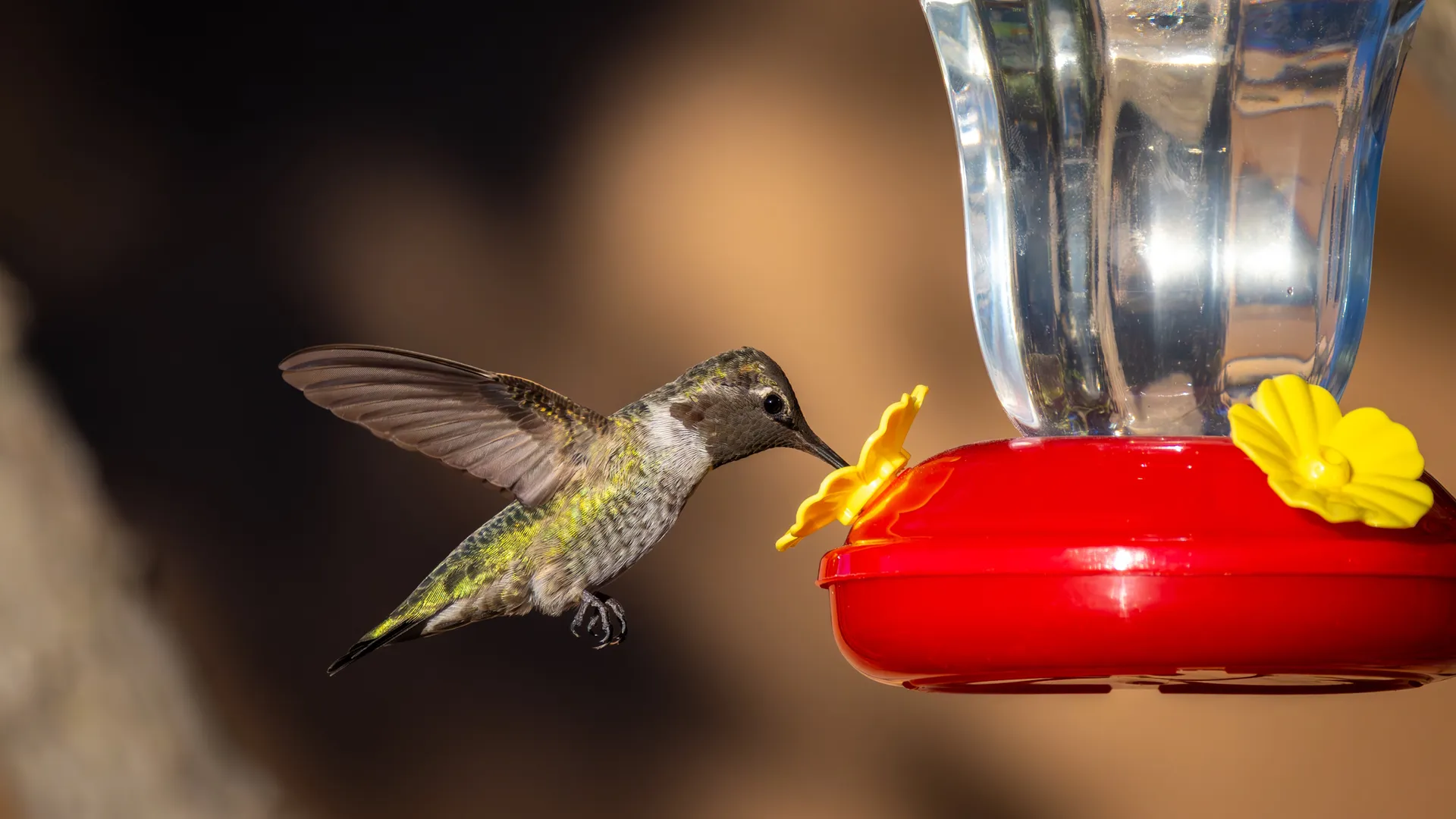
You'll often find bees buzzing around your hummingbird feeder in fall as they desperately seek nectar sources after lots of summer perennials have faded. But this can be a nuisance, blocking access to the feeder for its intended visitor, stealing resources from hummingbirds, and even risking the birds getting stung.
That's why if you want to attract hummingbirds and support them this fall, it's crucial to keep bees away from hummingbird feeders. At the same time, you can provide alternative food sources for bees (like growing these purple asters from Plant Addicts), so they aren't left without. But to keep them away from your feeder, you can use bee guards, clean it regularly, and position the feeder in a shadier location.
These simple adjustments can keep your hummingbird feeder free of unintended users, so it stays safe for the charming birds stopping by in your yard.
Use a Bee Guard
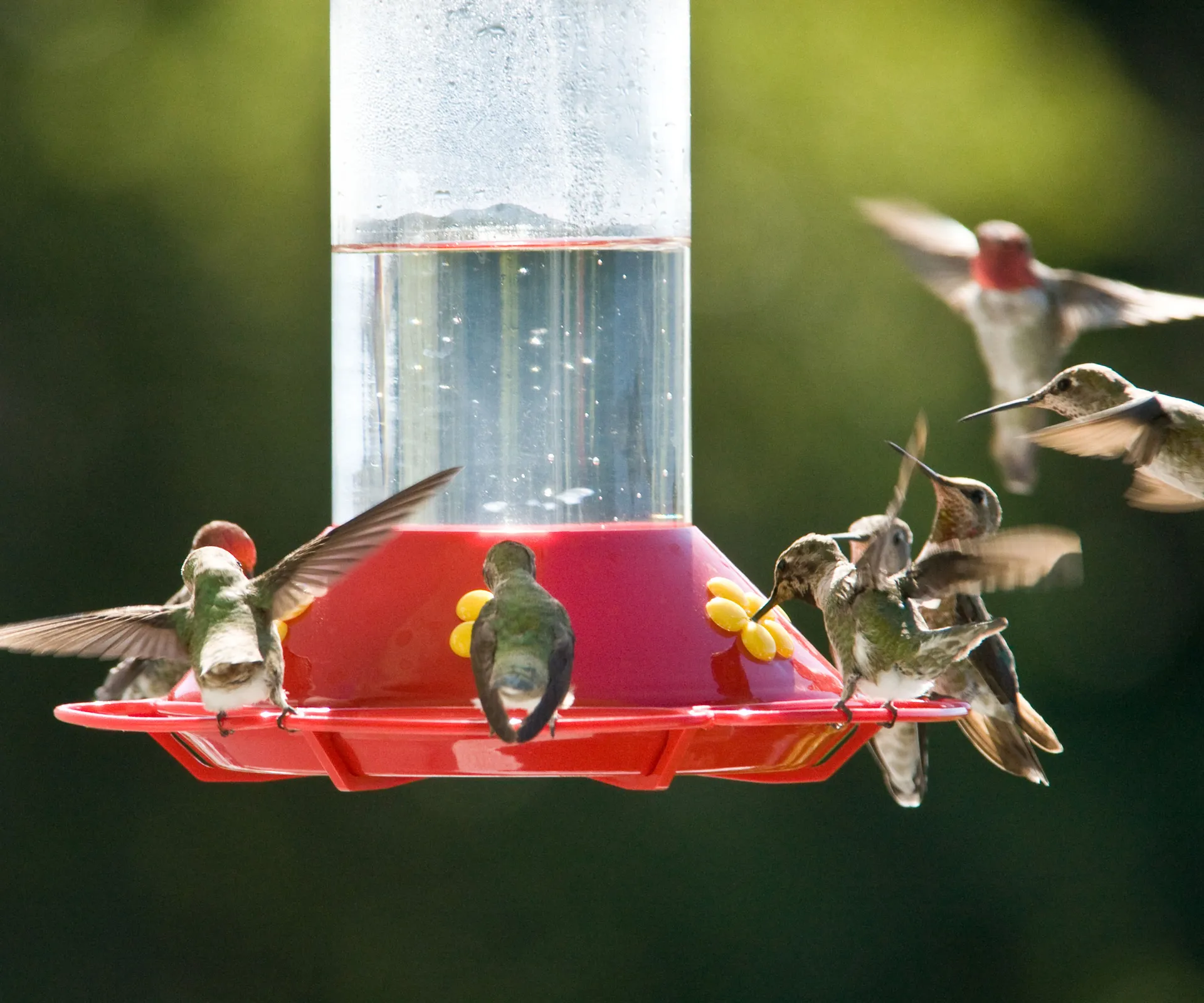
The easiest way to keep bees away from hummingbird feeders is by using a bee-resistant hummingbird feeder (like this one from Amazon). This is essentially a hummingbird feeder with feeding ports that have built-in bee guards.
In nature, hummingbirds target flowers with tubular blooms because these flowers suit their slender bills and long tongues, allowing them to reach the nectar without competing with other insects. A bee guard (which you can also purchase separately from Amazon to attach to your feeder) replicates this on a feeder.
This will make it hard for bees to reach the nectar in the feeder, while providing hummingbirds with easy access.
It can also be effective to avoid yellow feeding ports, which may attract pollinators. Red is a color hummingbirds are attracted to, so fully red hummingbird feeders (like this one from Walmart) are a good option.
Clean Your Feeder Regularly
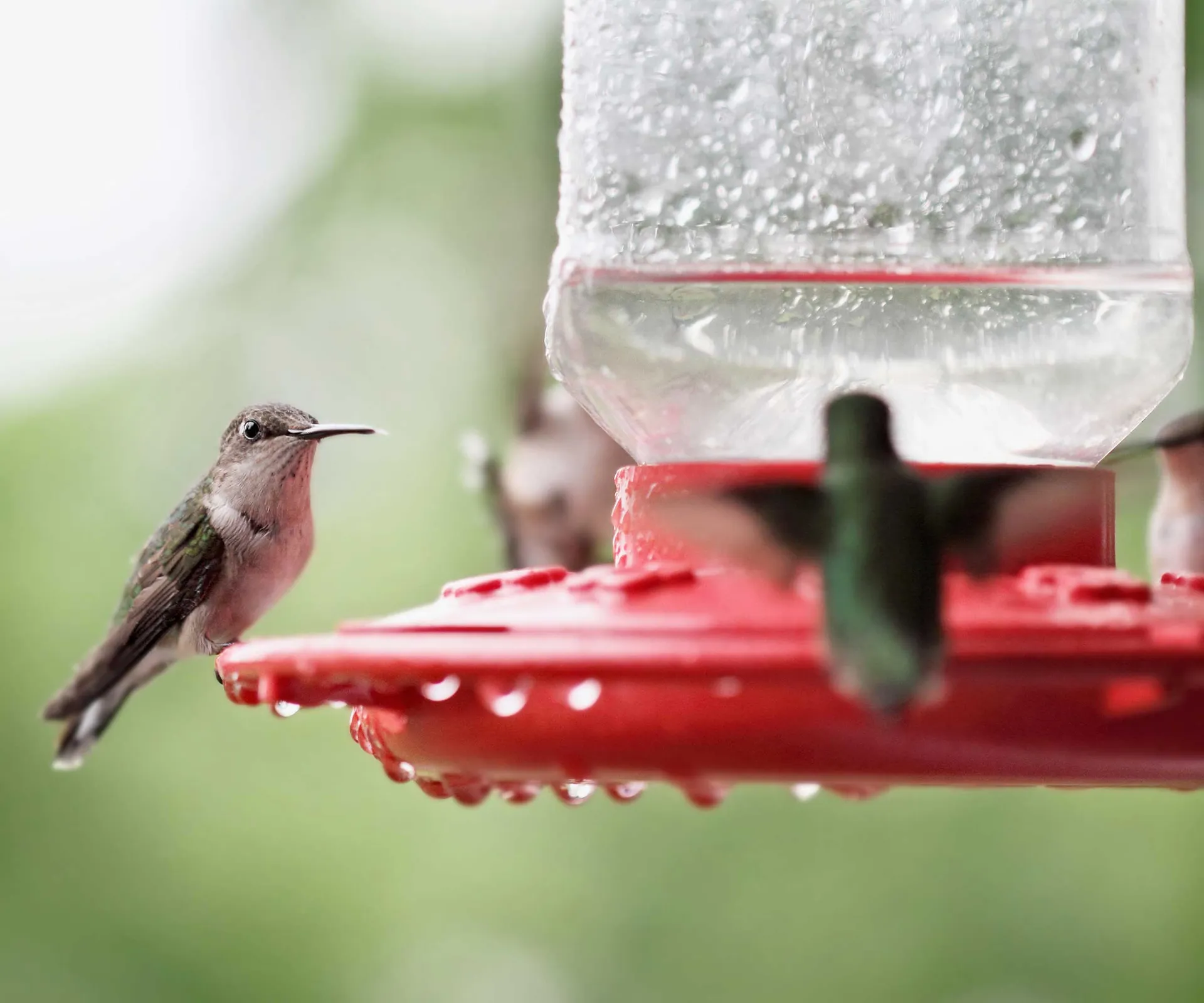
One of the main things that attracts bees to hummingbird feeders is a buildup of sugar and nectar around the feeding ports. Cleaning your hummingbird feeder regularly will prevent this problem.
You can use special hummingbird feeder cleaning brushes (like this from Walmart) to clean the feeding ports. This will also help keep the hummingbirds safe by removing harmful bacteria and stopping diseases from spreading.
Checking for leaks around the ports is also a good idea if it seems excessively sticky and hard to keep clean.
Provide Alternative Food for Bees

It's a positive sign that lots of bees are in your garden and you should definitely consider ways to support them. But it isn't ideal to let them take the hummingbird nectar in your feeder – that's where growing flowers for bees comes in handy.
By planting these in your garden, you can ensure there are plenty of resources for bees without hummingbirds having to compete over them. Plants for fall pollinators provide late-season nectar, including asters, salvia, and coneflowers (which you can order from Plant Addicts).
It's important to place your hummingbird feeder away from these blooms to discourage bees from using the feeder.
This pack of wildflower seeds for pollinators from Burpee has lots of varieties pollinators love for spring and summer.
Relocate Your Feeder to Somewhere Shadier

Another way to discourage bees from using your hummingbird feeder is by keeping it out of sunny spots. The warm nectar scent will attract bees, so placing the feeder somewhere cooler will limit this.
It isn't a foolproof solution, but it can strengthen your efforts to keep bees away from hummingbird feeders alongside other methods.
The other benefit of keeping your hummingbird feeder out of the sun is that it will stop the nectar from spoiling so quickly. Though, you should replenish hummingbird nectar (which you can pick up from Walmart) regularly to provide a fresh food source.
What to Shop
As well as keeping feeders topped up, you can grow purple fall flowers for hummingbirds to provide natural late-season nectar sources. Our guide to helping pollinators and birds in fall has more advice on making your garden wildlife-friendly over the coming months.
If you love inspiring garden ideas, outdoor advice, and the latest news, why not sign up for our newsletter and get the latest features delivered straight to your inbox?
